




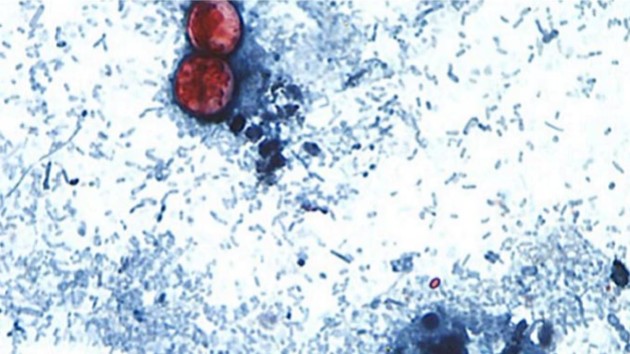
(NEW YORK) -- Hospitalizations in Michigan linked to an outbreak of cyclosporiasis, an intestinal illness caused by a parasite, have surpassed 100, health officials said Friday.
So far, 102 people have been hospitalized, according to the Michigan Department of Health and Human Services (MDHHS). There are more than 5,000 cases in the state, an increase of nearly 700 since Thursday, officials said.
The Centers for Disease Control and Prevention and the Food and Drug Administration are warning consumers not to eat shredded iceberg lettuce sold at select Taco Bells in five states -- Indiana, Kentucky, Michigan, Ohio, and West Virginia -- after the ingredient was linked to the outbreak. The CDC said that shredded iceberg lettuce sold in grocery stores or served in other restaurants is not affected.
Lettuce supplier Taylor Farms said it is voluntarily removing all iceberg lettuce sourced from central Mexico from the U.S. market.
Taylor Farms said the FDA traceback indicated a "specific farm" that accounts for "less than 1% of the U.S.'s iceberg lettuce supply" was a potential source, and they have removed all iceberg lettuce from the region indefinitely. No other Taylor Fresh Food products have been impacted and that no branded salad kits contain iceberg lettuce, Taylor Farms said.
"As a family owned and operated company, we are deeply concerned for those who became ill, their families, and the many Americans whose trust in the safety of their fresh produce has been shaken. That trust is something we've worked for decades to earn, and we are committed to doing everything in our power to restore that confidence," Taylor Farms said in a statement Friday.
Preliminary findings by Michigan health officials suggest lettuce or salad greens are the potential source of the illnesses. However, no specific type of produce, grower or supplier has been identified as the source, and federal health officials have not publicly identified a source of the outbreak.
The White House said on Thursday it is "closely monitoring" the cyclosporiasis outbreak and "has a handle on the situation."
Press secretary Karoline Leavitt said the White House is working with the FDA and partners at the federal, state and local levels to "increase detection methods," provide guidance and trace the outbreak.
On Tuesday, Taco Bell said it would voluntarily remove some ingredients at select restaurants as a precautionary measure.
"The health and safety of our guests is our top priority," Taco Bell Corp said in a statement to ABC News. "Public health officials have not confirmed a link to Taco Bell or any specific ingredient, supplier, restaurant or retailer. While authorities continue their broader review, Taco Bell has voluntarily and temporarily removed limited ingredients at select restaurants as a precautionary measure. We will continue to closely monitor the situation and follow the guidance of public health authorities."
Federal health officials said cases of cyclosporiasis will continue to rise in the U.S. The season is typically considered to be from May 1 to Aug. 31.
Additionally, the CDC sent out an alert to doctors around the country on Tuesday warning them of an increase in cases of cyclosporiasis.
Michigan health officials previously told ABC News the outbreak could be linked to food contamination.
Earlier this month, MDHHS sent out recommendations to restaurants and other commercial kitchens in southeast Michigan to reduce risks of exposure.
MDHHS data shows that most cases have been among adults, with 30 to 39 year olds making up the highest share.
The outbreak was first identified on June 29, when the Monroe County Health Department announced it was investigating a cluster of cases.
The parasite usually spreads through food or water contaminated with feces, according to the Centers for Disease Control and Prevention. It does not typically spread person-to-person.
Foodborne outbreaks of cyclosporiasis in the past have been linked to various types of imported fresh produce, such as raspberries, basil, snow peas, mesclun lettuce and cilantro, according to the CDC.
At least 31 other states have reported cases of cyclosporiasis, according to an ABC News tally, analyzing CDC data and state health department data.
Cyclosporiasis is treated with the oral antibiotic trimethoprim-sulfamethoxazole (TMP-SMX), commonly sold as Bactrim, Septra and Cotrim, and taken for 10 days, according to the CDC.
The agency says people can prevent infection by thoroughly washing produce, cutting away bruised or damaged parts of fruits and vegetables and refrigerating pre-prepared or pre-cut produce.
Additionally, the CDC recommends washing hands thoroughly with soap and water before handling or preparing raw fruits and vegetables.
ABC News' Karen Travers contributed to this report.
Copyright © 2026, ABC Audio. All rights reserved.